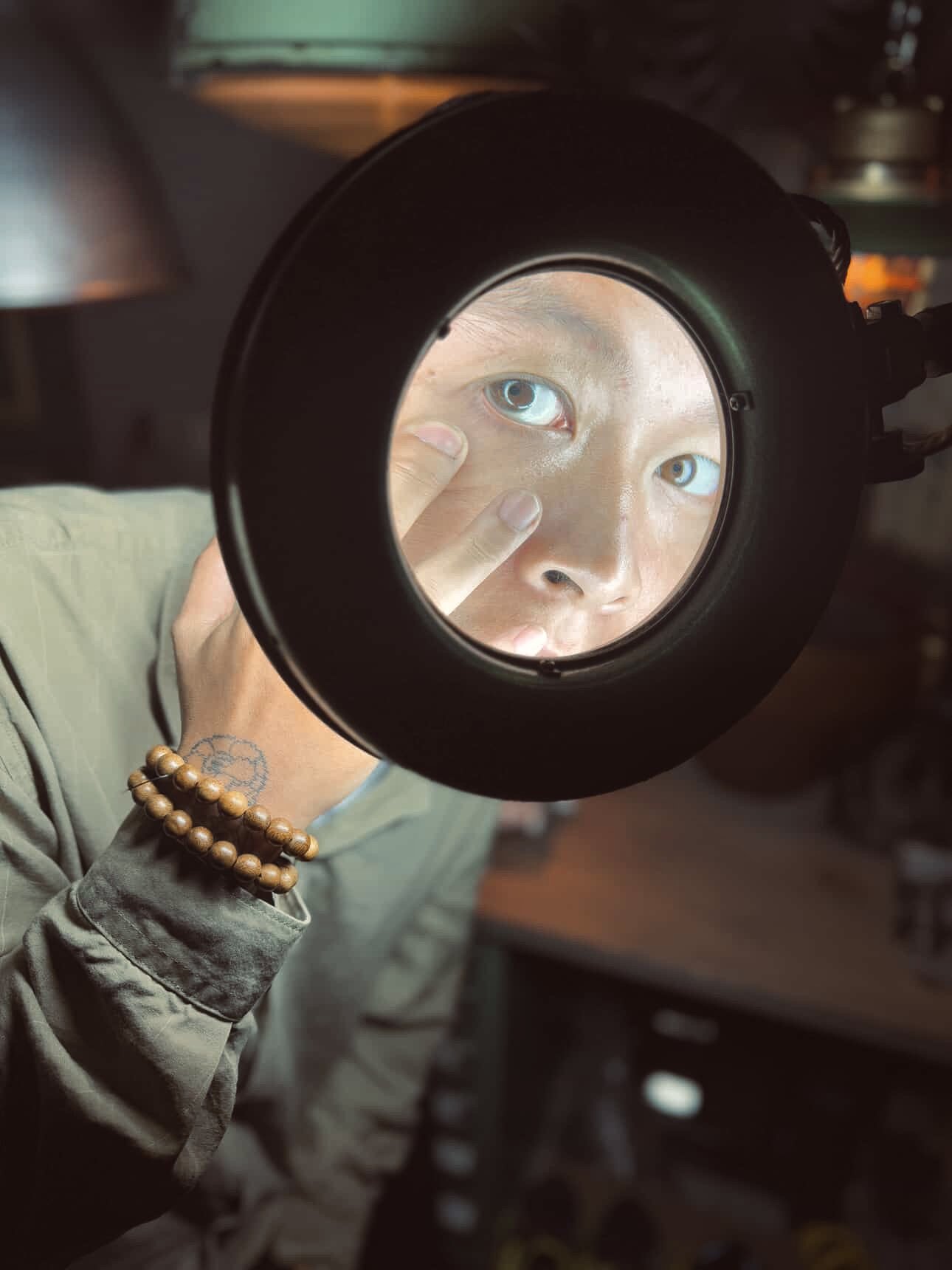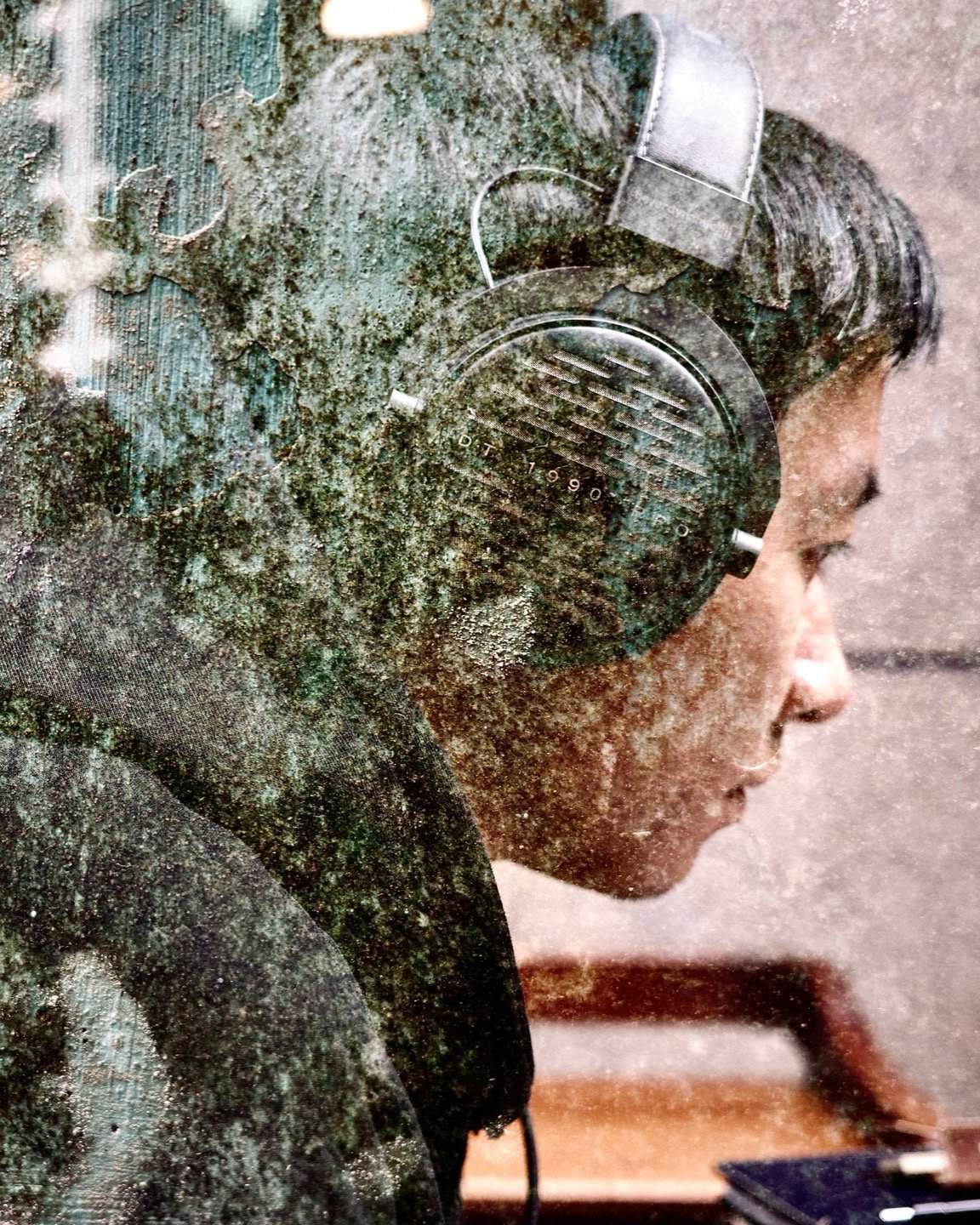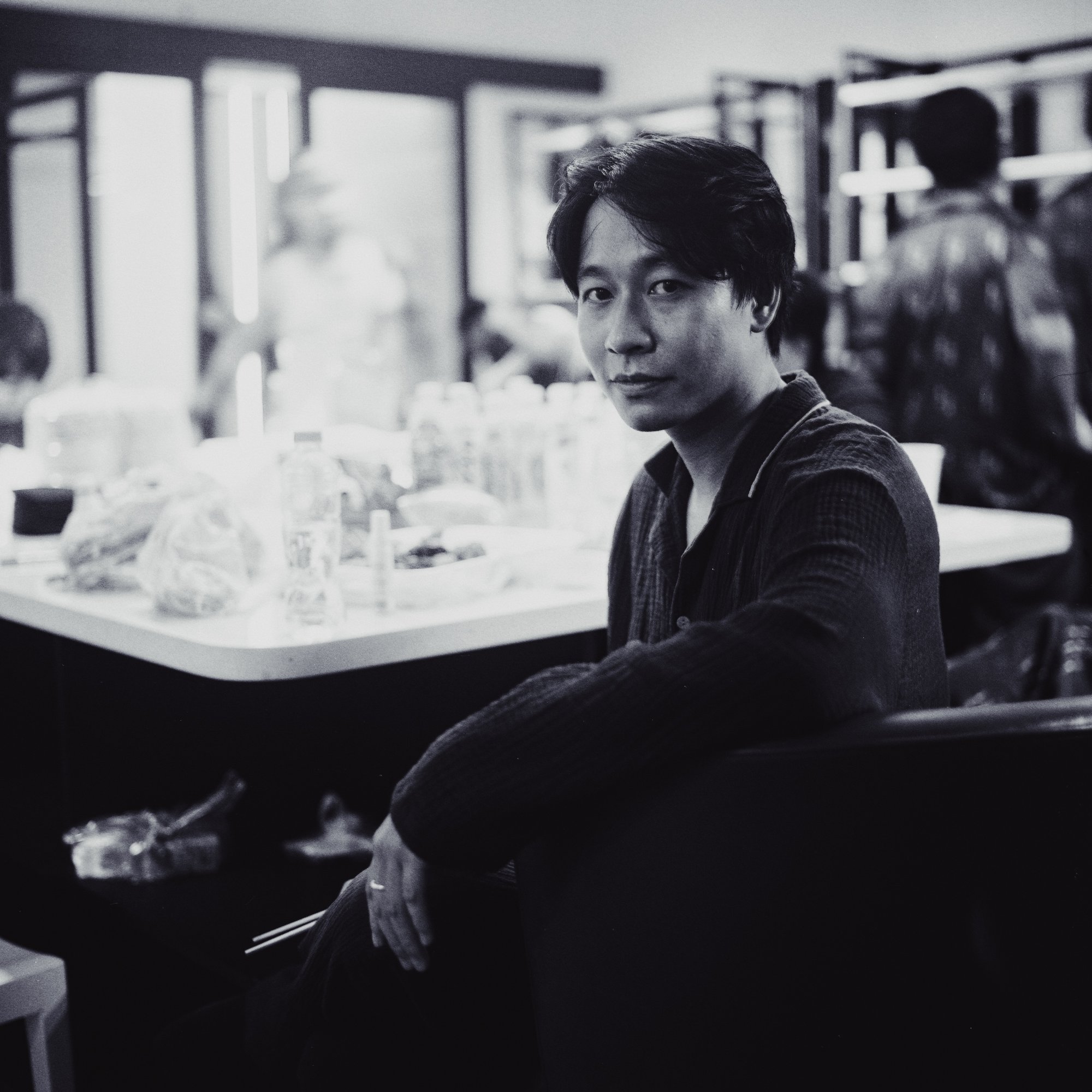
The story
Singer, songwriter and guitarist from Hà Nội, now living in Hội An. He used to play in Ngọt, who are no longer together.
The interview
Vũ Đinh Trọng Thắng occupies an iconic place in contemporary Vietnamese music. As the primary songwriter and frontman of Ngọt, he took a high-school bedroom project started in Hà Nội and turned it into an award-winning indie powerhouse, taking home Song of the Year and New Artist of the Year at the prestigious Dedication Music Awards. Despite filling major concert halls and penning anthems for an entire generation of Vietnamese listeners, his motivations have always remained distinctly introspective. He quietly relocated to Hội An, and we sat down with him to talk about the mechanics of songwriting, the burden of fame, what the scene still needs, and why every great band lives or dies by its drummer.
Give us an introduction in your own words.
My name is Thắng, I'm from Hà Nội. I started writing music when I was around 13 to 16, back in 2010 to 2012. It started as a hobby, and then I figured I should just do it professionally. I started my band in university in 2013, and it slowly caught wind. We started on SoundCloud, got a few listeners, and a few of them turned into a serious crowd. It was a slow build.
My brother was a songwriter, so the tools were available to me everywhere at home from an early age. When I was around 16 or 17, I realized that if I wanted to survive in society, I needed to build some kind of skill, because I wasn't particularly good at anything and especially bad with logical stuff. I figured it had to be art. I was picking between filmmaking and music. Either was good for me, but filmmaking was too hard, so I went with music.
"I wasn't particularly good at anything, and I was especially bad with logical stuff. I figured it had to be art."
You have a real interest in language. How does that feed into your songwriting? Are lyrics and music separate things in your mind?
They are certainly different, but it's a wonderful thing that they work together because they are two different kinds of language. Music is a very flexible language. At first I didn't think about it much. I would just come up with a chord and a melody, and the lyrics came way later. I didn't really care about the lyrics initially.
But I have a literature background because both my parents liked to read books, and I inherited that from them. Over time I started to really pay attention to words and how they sound, how they sit inside a melody, what they do to the feeling of a song. Songwriting and lyric writing pull from completely different parts of you, but when they're working together well, that's when something real happens.
Are there tracks that stand out for you, songs where the process of making them was particularly memorable?
I'm not good with memories, but I remember some of the sparks. There are two kinds of songs. The majority is the stuff where you have to walk through the mud and try to get it out. Sometimes it feels like archeology. You’re uncovering a new site and in the process of discovery you try not to lose a note, you have to be gentle with it. And then the second kind of just hits in its full entirety. You're driving and it's just boom. You rush home and you try to write it. That happens very far and few in between.
It happened more when I first started. I had a friend, more famous than me, and when he was starting out it was hitting him all the time. Now he says it's all shit. I think of it like trial mode from the music. When you first start, you get beginner's luck and you just ride it. But then you have to just be a professional.
For me, I think I love the most the days where it just doesn't come, and then finally it does. I remember one song. It was after four hours face down into a blank page. And I just wrote what I saw, which was a blank page. The song is called "Blank Page." It's about how all of your previous achievements mean nothing when you face what's in front of you. Your past success isn't going to make it any easier. But that's part of the game. That's the challenge.
"I love the most the days where it just doesn't come, and then finally it does."
What are you working on creatively right now, and how does writing alone compare to writing with a band?
I'm facing a new problem where I have a lot of very good ideas that don't have any chemistry together. I have good song after good song, but they all seem like they belong to completely different albums, and I've only got time to make one at a time. I'm figuring it out. I guess I'm writing an album.
Writing alone is very different from writing with a band. When I was with Ngọt, I gave everyone the job of arranging together. Everyone had a friend to call, someone to push back against, someone to make the idea better or stranger or more itself. Now it's just me, my budget, and my contacts. I have to write everything down first, map out the who and the why, and then everybody else comes in to handle the how. The responsibility is much more concentrated. There's nobody to catch you if something isn't working. You have to catch it yourself.
"I have good song after good song, but they all seem like they belong to completely different albums."
Would you be in a band again?
With Ngọt, we didn't break up with any drama. We've been talking about working together again, so it's possible. Right now I just keep writing and something will amass.
I'm actually trying to make a side band here with a very good drummer and a bassist, but the problem is none of them live in Hội An. I would love to have a band here. There's something about the daily proximity, being in the same room, that you can't replicate over distance. I even have a local cover band with some friends playing The Beatles, where we just make money for beers. A beer career, you could call it. But the itch for something more serious is there.
After the awards, the acclaim, the venues filling up: how did that level of fame sit with you?
Success and being famous is always a weird thing for me. That's part of the reason I live in Hội An. I'm not used to the feeling of people going, oh, it's him. I like to be the observer of the world, and now the world is observing me.
I like to perform and play in front of people. It's good exercise and good communication. But sometimes when you finally succeed in a direction, it's not what you wanted at all. It can be very depressing. You spend so long moving toward something, and when you get there you realize the thing you were chasing wasn't the point. The making was the point. That's something you only understand after the fact, and it takes a while to recalibrate.
"I like to be the observer of the world, and now the world is observing me."
You were drawn to filmmaking before music. Does that still speak to you?
I actually have a bad relationship with music videos. Because I love movies so much, I'd always try to tell the director what to do and they wouldn't like it. In the end it always became a mess. My videos are all over the place, one looks like this, another looks like that. I never stayed with one director or had a full plan of what I should look like as an artist. I would love to have better music videos, but I don't think I do yet.
I almost took a job scoring a film once, for a really good contemporary director, one of the best working in Vietnam right now. He was making a new movie and asked me, and then he used this Vietnamese word to describe the feeling the score needed. I didn't fully understand it, but it was something between creepy and melancholic. Not quite either, but somewhere in that space. That's exactly what film music has to do. It needs to convey a very unspecific emotion, something that sits underneath the image without explaining it. At the time I was just a songwriter starting out and I wasn't ready for that. I missed that job and I really regret it. But I hope something like that comes up again. Writing a score is still something I want to prove I can do.
"Film music needs to convey a very unspecific emotion. I missed that job and I really regret it."
How is the Hội An music scene working for you, and what does it need to keep growing?
It's an impressive music scene, and I'm just starting to get to know everybody. The first two years were mostly about settling down, but I've met some absolute monster musicians here, people with crazy talent. Hội An is a port for artists. People visit and show me their music, and I'm blown away. And we're starting to get good drummers, thank goodness. A band is only as good as its drummer. He's the engine and the energy.
What we need is a venue and a studio. Hội An is the perfect place for a musician to get away, focus, and record, but we need a proper studio to make that real. And for performing, we lack a proper indoor venue for around 200 to 500 people standing. Places always want tables and seats to sell drinks, but when you listen to rock or live music, you need to be able to stand, dance, and feel close to the crowd. Hà Nội Rock City was the only place doing that in Hà Nội, and RFC in Saigon before it closed. That kind of space changes everything, not just for the audience but for what a band is willing to attempt on stage.
"A band is only as good as its drummer. He's the engine and the energy."
"When you listen to rock or live music, you need to stand, dance, and feel close to the crowd."
What is your core advice for people trying to get into music or start a band?
To reference David Bowie: the biggest risk in life is not taking any risk. When you try to start a project, if you're feeling self-doubt or thinking, maybe I shouldn't do this, you're in the right place. That feeling means you're growing. It should feel like you're out in the wild hunting for rabbits, rabbits being those little ideas that spark something. Stephen Pressfield described writing as wandering around in the bushes until the idea appears. David Lynch said if you want a decent hour of writing, you have to write for four hours. The work creates the conditions for the work.
And listen up, drummers: get it together. I worked with a drummer in Hội An who plays for four hours every day without even having a show lined up, just because he loves it and is serious about it. That's the attitude you need. Back in Hà Nội I had to use an electric drum kit turned way down and the neighbors were still pissed off at me. Here, I don't have a soundproof room. I just bang on a real drum kit, and the neighbors say: it's fine, we'll just sing karaoke louder than you. That kind of freedom is everything when you're trying to build something.
"In Hội An I just bang on a real drum kit, and the neighbors say: it's fine, we'll just sing karaoke louder than you."
Singer, songwriter and guitarist
Ngọt (no longer together)